HOME > Rhinoplasty Center > Upturned / Short Nose
NOSE CENTER
A short nose made longer and refined Upturned & Short Nose Correction
The upturned tip is brought down and the nose lengthened for stable proportions.
Duration
2–2.5 hours
Anesthesia
Sedation
Hospitalization
Same-day discharge
Stitch Removal
5–7 days
Recovery
Daily life in about 2 weeks
ANSWER Upturned / Short Nose
An upturned or short nose shows the nostrils prominently from the front and can throw off facial balance. It may be congenital or result from contracture after surgery. ANSWER Plastic Surgery lengthens the tip downward with autologous cartilage, reducing nostril show and aiming for stable proportions.
When Upturned / Short Nose is needed
If any of the following apply to you, we recommend a specialist consultation.

Nostrils very visible
The nostrils show openly from the front, giving an upturned look
A short nose
The nose is short for the face, making the midface proportions look off
Contracture after surgery
Previous rhinoplasty led to contracture, shortening and lifting the nose
An excessive profile angle
The tip is rotated too far up, making the profile look unnatural
CUSTOM DESIGN
Extension designed with the skin reserve in mind
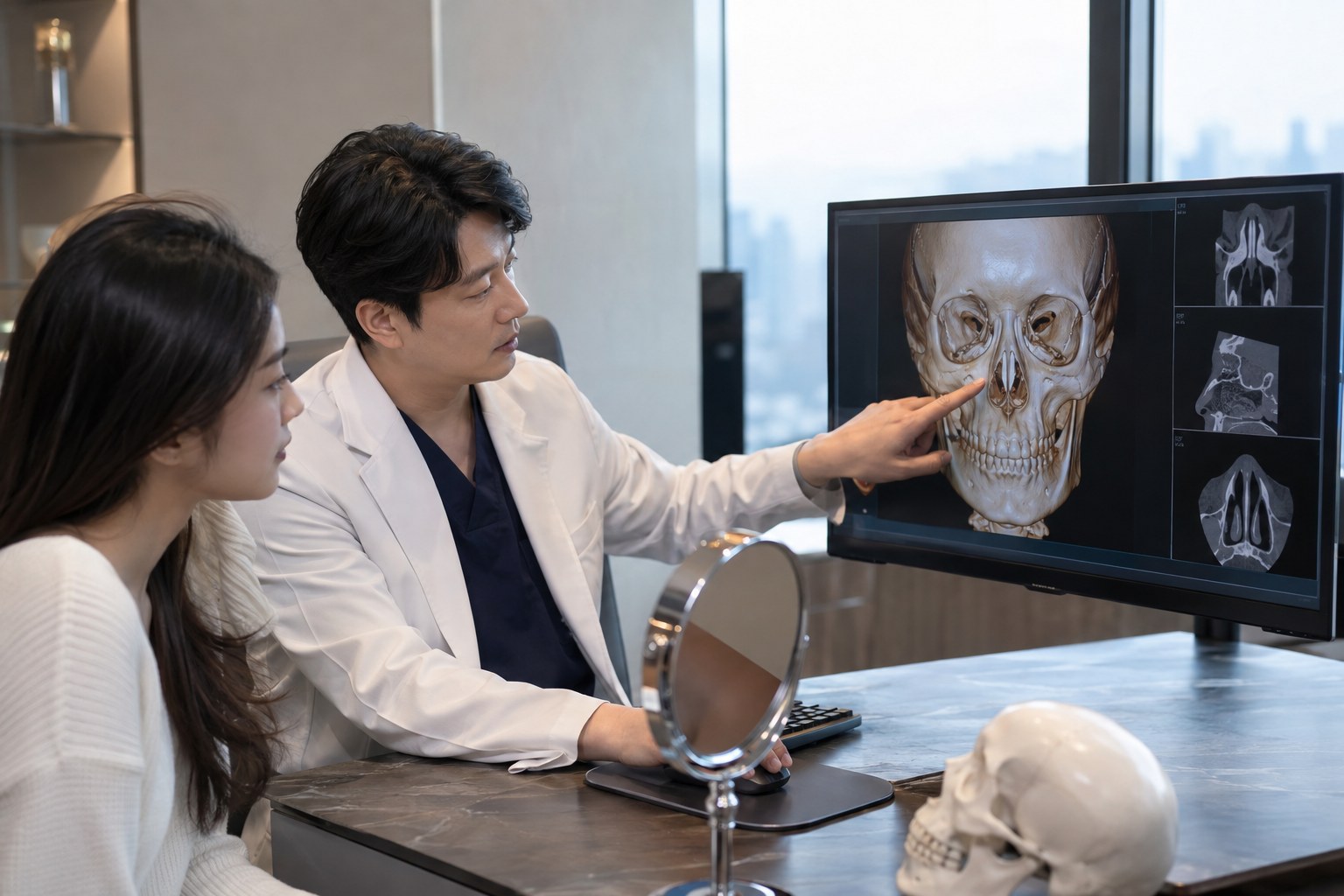
Nasal lengthening depends not only on the cartilage framework but on how far the skin and lining can stretch. ANSWER evaluates skin tension and tissue reserve to calculate a safe extension, and for contracted noses also considers a staged approach depending on tissue condition.
- 1Extension amount decided after assessing skin and mucosal reserve
- 2Approach designed separately for congenital and contracted types
- 3Nostril show and profile angle planned together
ANSWER POINT
Extension held by autologous cartilage struts
Keeping the tip extended requires a firm support that resists the skin's pull back. ANSWER builds a sturdy extension strut from septal or ear cartilage — rib cartilage when needed — aiming for a structure that does not turn up again over time.
- 1The right material chosen among septal, ear, and rib cartilage
- 2Extension strut and tip cartilage firmly fixed
- 3Contracted tissue released to ease the skin's recoil
- 4An autologous-tissue structure that relies less on implants

ANSWER Upturned / Short Nose: How It's Done
Consultation & Tissue Evaluation
The degree of upturn, skin reserve, and any contracture are evaluated to establish the feasible extension.
Extension Design
Target length and tip angle are set and the cartilage material chosen.
Release of Contracted Tissue
Shortened tissue and adhesions are fully released to create room for extension.
Strut Building & Extension
An autologous cartilage strut extends and fixes the tip downward.
Recovery Care
The fixation period is maintained to hold the extension, with regular progress checks.
Frequently Asked Questions
QWhy is short-nose correction considered difficult?
The extended length must be held against the skin's tendency to pull back. It requires thorough tissue release and a sturdy autologous cartilage strut, demanding more precise design than standard rhinoplasty.
QIs rib cartilage essential for lengthening?
If the extension is modest, septal or ear cartilage may suffice. Rib cartilage is considered when contracture is severe or a large extension is needed; the right material is advised after diagnosis.
QCan the tip turn up again after surgery?
Skin recoil can cause slight relapse, so we design with that in mind and fix a sturdy strut to limit change. Keeping the fixation period and attending follow-up visits are important.
Ask ANSWER about Upturned / Short Nose
ANSWER Plastic Surgery 02.6959.4881 | Weekdays AM 10:00 - PM 07:00
The content on this page is provided for medical information purposes. Surgical methods and results may vary depending on individual conditions. All surgery carries the possibility of side effects, so please decide only after a thorough consultation with your doctor.