HOME > Rhinoplasty Center > Deviated Nose
NOSE CENTER
Correcting both function and shape Deviated Nose Correction
The deviated bridge and septum are corrected together for a straight line and easy breathing.
Duration
2–2.5 hours
Anesthesia
Sedation
Hospitalization
Same-day discharge
Stitch Removal
5–7 days
Recovery
Daily life in about 2 weeks
ANSWER Deviated Nose
A deviated nose often involves not only a visibly crooked bridge but a deviated internal septum, which can bring functional problems such as nasal obstruction. ANSWER Plastic Surgery corrects the causes of deviation step by step — bone, cartilage, and septum — aiming to improve shape and breathing together.
When Deviated Nose is needed
If any of the following apply to you, we recommend a specialist consultation.

Nose looks crooked from the front
In frontal photos, the bridge curves in a C or S shape
Accompanied by nasal obstruction
One side is often blocked and a deviated septum has been diagnosed
Deformity after trauma
The nose became crooked after an impact or injury
Deviation after surgery
An implant or the tip shifted to one side after previous rhinoplasty
CUSTOM DESIGN
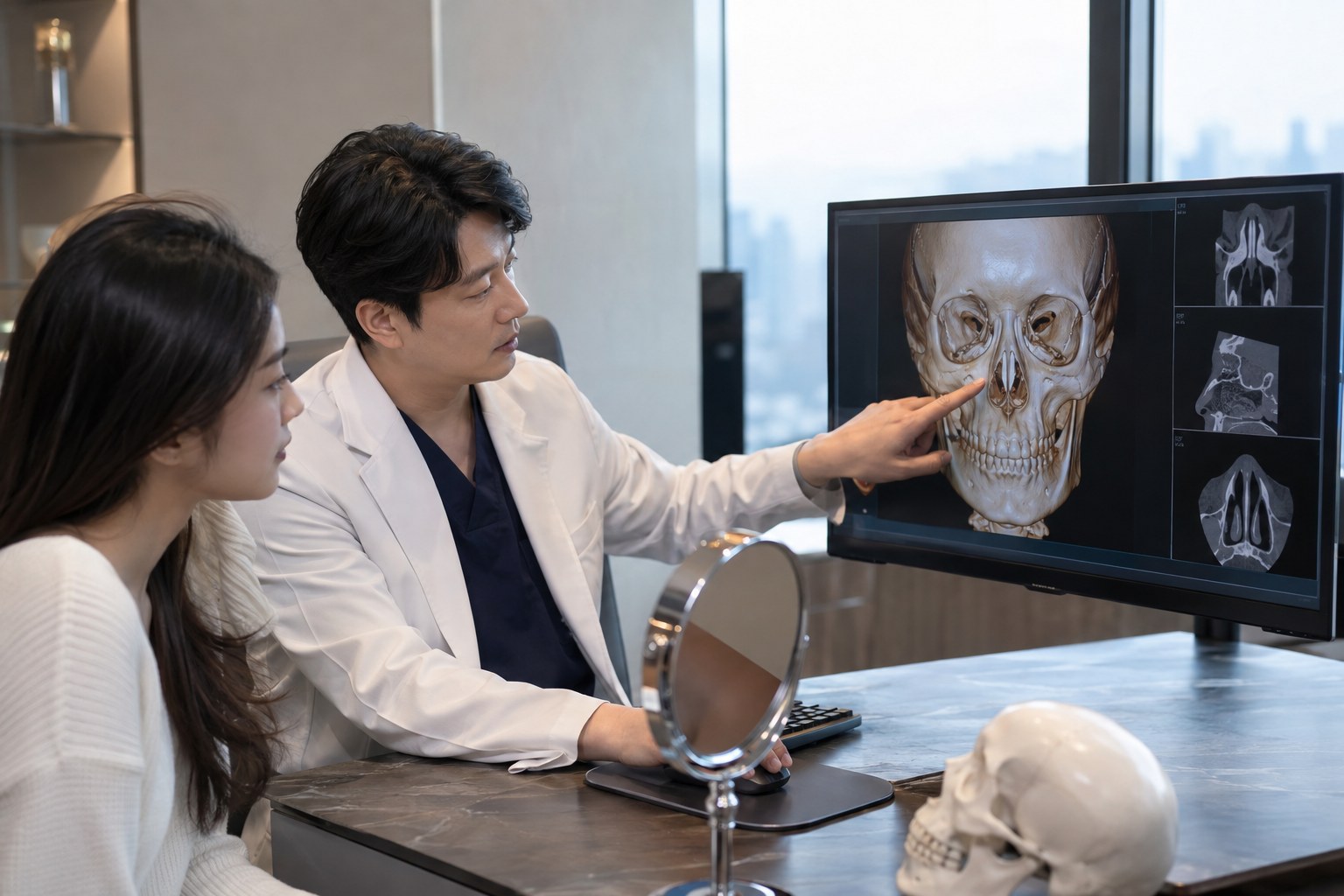
Diagnosis that maps deviation by segment
A deviated nose can involve the bony segment, the cartilaginous segment, or the septum — and usually some mix. Correction starts with precisely separating the causes. ANSWER analyzes the direction and degree of deviation per segment and plans your individual combination of osteotomy, cartilage correction, and septoplasty.
- 1Deviation analyzed by segment: bone, cartilage, septum
- 2Degree measured on frontal and basal photos
- 3Functional correction planned when obstruction coexists
ANSWER POINT
Structural correction that reduces recurrence
Deviated cartilage tends to return to its original direction, so merely straightening the surface can let it bend again. ANSWER straightens the deviated septum and reinforces it with batten cartilage, building a genuinely straight structure so the line holds over time.
- 1Septal correction realigns the central axis
- 2Cartilage reinforcement restrains the memory of bent cartilage
- 3Osteotomy corrects bony deviation when needed
- 4Left–right symmetry re-verified after correction

ANSWER Deviated Nose: How It's Done
Consultation & Precise Diagnosis
The segments and degree of deviation and any obstruction are assessed, and the scope planned.
Correction Design
The combination of osteotomy, septoplasty, and cartilage grafting is designed for your condition.
Septum & Cartilage Correction
The deviated septum is straightened and batten cartilage sets the central axis.
Osteotomy & Alignment
When needed, the nasal bones are repositioned into a straight line.
Recovery Care
Internal splints and external fixation maintain the correction while we monitor progress.
Frequently Asked Questions
QWill correcting the deviation also improve my blocked nose?
If the obstruction stems from a deviated septum, breathing can become easier after correction. When other causes such as rhinitis coexist, the degree of improvement may differ, so we identify the causes before surgery and advise you.
QCan the nose bend again after correction?
Because cartilage has shape memory, a slight re-deviation cannot be entirely ruled out. We combine structural measures such as cartilage reinforcement to reduce it, and monitor the condition with regular follow-up.
QCan deviation correction and augmentation be done together?
Yes. The deviation is corrected first, and bridge and tip work often proceed in the same operation, designed together for a harmonious overall line.
Ask ANSWER about Deviated Nose
ANSWER Plastic Surgery 02.6959.4881 | Weekdays AM 10:00 - PM 07:00
The content on this page is provided for medical information purposes. Surgical methods and results may vary depending on individual conditions. All surgery carries the possibility of side effects, so please decide only after a thorough consultation with your doctor.